Why do big businesses collaborate, but microentrepreneurs often fly solo?
While cooperation is the norm for multinational corporations, this is not the case for microentrepreneurs who have a more cautious approach and often fly solo. Professor Kenneth Amaeshi explores the challenges that hinder cooperation by small businesses, highlights the needs of microentrepreneurs, and presents the opportunities offered by an initiative for microentrepreneurs in Nigeria.
Author:

Topics:
Reading time: 6 min.
For most of my professional life, I have worked with large organisations and multinational corporations—powerful institutions with resources, influence, and global reach.
In these environments, collaboration is not only typical; it is an expectation. Businesses merge, form partnerships, acquire one another, build alliances, and invest in joint ventures. Cooperation is fundamental to how they grow, dominate markets, and extend their relevance. Occasionally, their cooperation even undermines market competition, which is why laws against collusion and monopolies exist. Nevertheless, within ethical and legal boundaries, collaboration is good business.
A recent experience, however, has taken me on a different journey that challenges this perspective. As Chief Economic Adviser to Distinguished Senator Hope Uzodimma, the Governor of Imo State, Nigeria, I have had the privilege of working with both large institutions and small business owners at the grassroots level within the State.
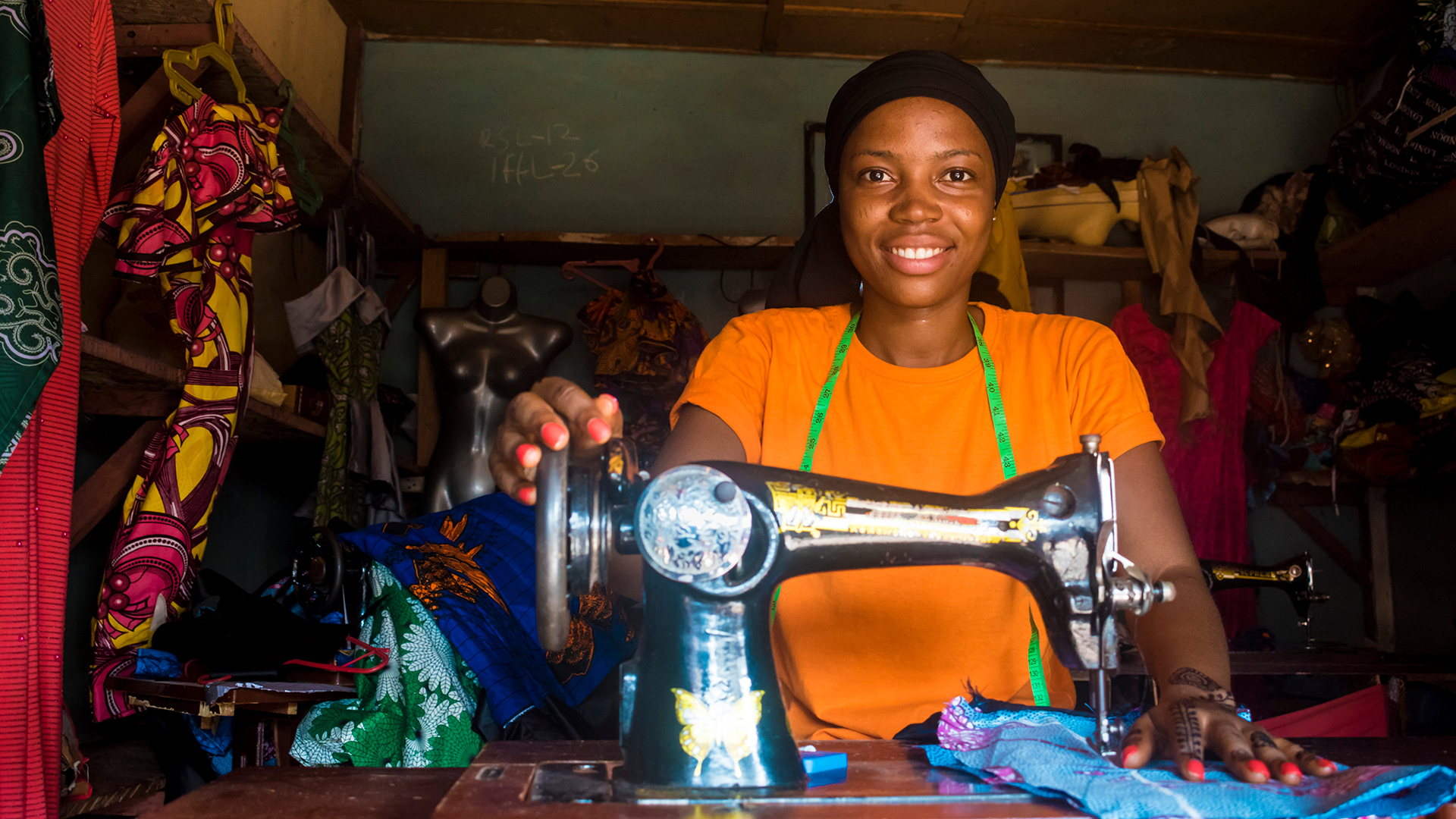
Through the ‘One Kindred One Business Initiative’ (OKOBI), for example, I have engaged with microentrepreneurs—market traders, tailors, hairdressers, farmers, and artisans. These individuals, who form the backbone of the informal economy in Nigeria, are enterprising, creative, and resilient. Yet strikingly, they often struggle to collaborate effectively on economic ventures.
OKOBI aims to promote group-owned businesses across communities in Imo State. Rather than individuals launching businesses that often remain small and vulnerable, the initiative encourages people within kindreds to come together, pool resources, and build more sustainable enterprises. This seems like a logical step. After all, most successful big businesses are group-owned, often through shareholding structures, and are run by teams and departments.
Moreover, in many Nigerian communities, especially among the Igbo, people regularly collaborate on social projects. They contribute funds and effort to build roads, town halls, churches, schools, and health centres. The potential for collective wealth creation is enormous if that same energy can be directed towards economic ventures.
The challenges for microentrepreneurs
Yet, despite this cultural foundation of cooperation, my expectations of microentrepreneurs in Imo State, Nigeria, to easily collaborate on business ventures with others have not matched the reality. What I have observed on the ground is that many microentrepreneurs are reluctant to work together when it comes to business. They are cautious, often preferring to operate independently. Even when group businesses are formed, this typically occurs through external nudging, support, or incentives. On their own, the majority still chose individual enterprise.
This raises a crucial question: Why is it easy for such communities to come together to build a church, but difficult for the same individuals to collaborate on building a factory or a farm?
One answer lies in how people perceive ownership. For many small business owners, especially those who have worked hard to climb out of poverty, owning a business is far more than a source of income; it is a badge of honour. It reflects their self-worth, their struggle, and their achievement. Sharing ownership or control with others, especially those whose abilities or trustworthiness they may question, feels like a threat. They fear that a group business might fail, not due to their own decisions, but because of other’s missteps. And in a challenging environment where second chances are rare, failure is not a luxury they can afford.
Beyond personal ownership, class identity also plays a role. For many microentrepreneurs, business success marks a turning point between their past and present. It is not only about earning income but also about ascending to a new social status. Consequently, working with individuals from their former class may feel like stepping back or losing their unique position. Some want to be seen as the standout success, the sole shining light in the community—“the only cock in the village,’’ so to speak. In this mindset, collaboration is perceived less as a strategic partnership and more as a compromise.
Big businesses, in contrast, have the advantage of multiple safety nets. They can take risks, try partnerships, and explore joint ventures because they have legal teams, financial buffers, management expertise, and access to capital. When they fail, they bounce back. The downside of risk is absorbed across large structures. For a microentrepreneur, however, a failed collaboration could mean total collapse. Therefore, their caution is justifiable.
Yet, this caution, while understandable, limits their potential. When implemented strategically, group enterprises reduce costs, increase bargaining power, and open up access to larger markets. They enable small players to achieve what would be impossible individually. This is why OKOBI exists—not just as a policy programme, but as a mindset revolution.
OKOBI: more than an initiative, a mindset revolution
OKOBI has already registered about 400 group-owned businesses involving more than 10,000 members. These businesses offer compelling early proof that grassroots cooperation is not only possible, but transformative. However, more work is needed to change attitudes and build trust for this movement to grow.
Education is critical. That is why the OKOBI initiative is now being introduced into the academic environment. Through the newly launched OKOBI Student Clubs—starting at Kingsley Ozumba Madiwe University (KOMU)— OKOBI is instilling the values of collaboration in young people before they develop an entrenched solo-entrepreneur mindset. By making group business formation a topic of study and discussion, OKOBI hopes to inspire a new generation of entrepreneurs who see strength in unity.
Support systems are equally important. Big businesses do not collaborate in a vacuum—they have lawyers, consultants, and institutions backing them. Microentrepreneurs also need such infrastructure. Organisations such as Africa Business Affairs are stepping into this space, offering guidance and support for group-owned community businesses across Nigeria and beyond. But more partners—governments, private firms, and development agencies—must join in to scale this effort.
Perhaps most important of all is the need to tell success stories. Witnessing peers succeed through group efforts directly reduces scepticism. When communities observe that a cooperative cassava processing business is working well, or a shared poultry farm is generating income for families, they begin to imagine similar possibilities for themselves. Role modelling matters. Stories build belief.
The goal of OKOBI is ambitious. The initiative aims to help create 100,000 new jobs across Imo State in the next three years. That is more than double the number of civil servants currently employed by the state government. But beyond numbers, the deeper mission is to reframe how entrepreneurship is practised and perceived in Nigeria—to shift from the isolated hustle to the power of shared prosperity.
This lesson extends far beyond Imo State. It applies across Nigeria, where millions of microentrepreneurs are striving, alone, to climb the same ladder. If we can teach collaboration, build trust, provide support, and celebrate collective wins, we can unlock a new era of grassroots development. The talent is here. The ambition is here. What remains is the will to rise together.
Tags: Africa, Collaboration, Small Business, Nigeria, Small Enterprises