Learning the responsibility of research in a world of inequality
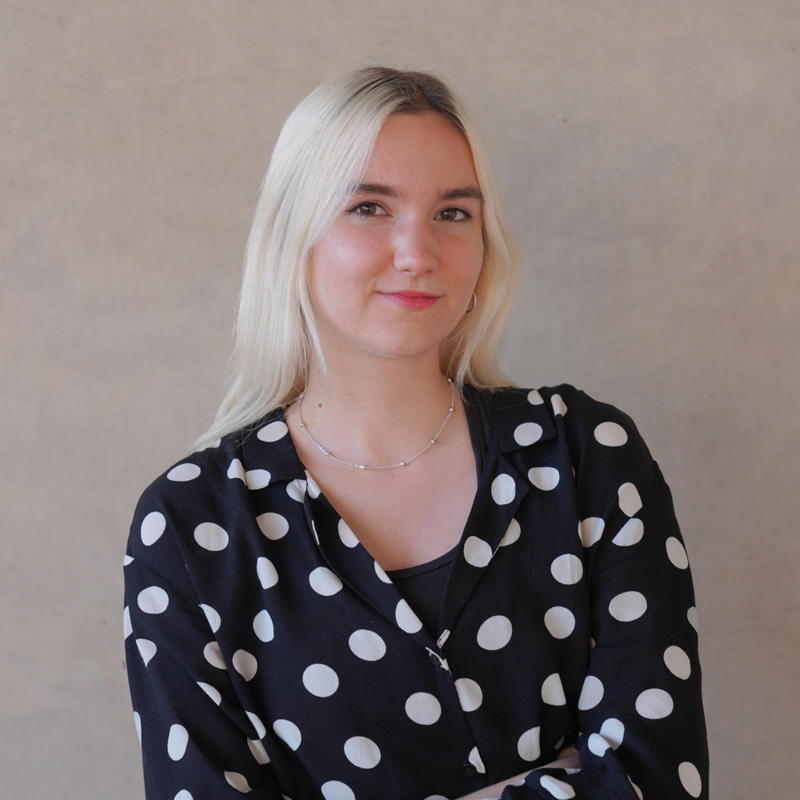
In this first-person account, EUI doctoral researcher Zuzanna Samson explores how learning, privilege, and inequality reshaped her understanding of responsibility—an essay on The Power of Knowledge.
Author:

Reading time: 6 min.
On the occasion of the EUI flagship event EUIdeas, which shares this platform’s name, we asked EUI academics: What is the most powerful piece of knowledge you have encountered, and how has it transformed your research?
Here, the personal story of Zuzanna Samson:
I remember being around ten years old when my parents asked the familiar question: What would you like to do when you grow up? I answered that I loved learning and, if it were possible to get paid for that, I would happily keep going to school. At the time, it felt more like a joke than an actual wish. Learning was something I enjoyed. However, it was not yet connected to any idea about my future.
Not surprisingly, I continued to learn for many years without being paid for it. Yet, looking back, I was already being supported in ways I did not fully acknowledge. I grew up in a small town in eastern Poland - a country undergoing rapid transformation at the turn of the century. My childhood coincided with a period of relative economic growth and political stability following Poland’s accession to the European Union. My parents, through steady work and careful planning, built a secure but humble life that allowed me to focus on school and dream about studying abroad. This pure enjoyment of learning eventually led me to pursue a master’s degree at the London School of Economics, where, even in pre-Brexit conditions, I had to rely on family support, when part-time jobs fell short of covering London’s rent.
The possibility of continuing my education, of imagining a life structured around thinking, reading, and asking questions, was never guaranteed nor simply the result of personal determination. It was the product of a particular set of circumstances that I only later came to recognise as privilege. My educational trajectory was shaped by serendipity, timing, geography, and the often-invisible infrastructures of support. It was during my time at LSE that I was exposed to ideas that fundamentally reshaped how I understood all of this. During the Human Rights programme I completed, we read and discussed a wide range of thinkers – from Amartya Sen and John Rawls to Judith Butler and Gayatri Spivak. For the first time, I was asked to think seriously about inequality, justice, power, positionality, and responsibility. These were not just abstract debates. They were ways of seeing the world differently, of recognising structures and asymmetries that shape who gets to speak up, who gets to move freely, and who can dream about learning for a living.
The most important piece of knowledge that I have acquired is a quote from that period spoken by Toni Morrison to her students: “When you get these jobs that you have been so brilliantly trained for, just remember that your real job is that you are free, you need to free somebody else. If you have some power, your job is to empower somebody else.” What became clear to me was that knowledge is never neutral. It does not simply describe the world, but it positions us within it. To understand inequality is also to become implicated in it. To recognise privilege is to see it not as an individual achievement, but as something relational, something that exists because others do not have access to the same conditions. This realisation changed how I thought about my future. Around me, many of my peers at LSE were preparing for careers in finance or consultancy - paths that offered financial stability and prestige. There was nothing wrong with those choices. But, for me, the idea of pursuing mere comfort without questioning it, felt uncomfortable and no longer sufficient. The more I learned, the less I could see knowledge as something to accumulate for personal advancement alone.
After completing my studies, I began working on issues related to human trafficking and forced displacement. At the time, I still held a relatively straightforward belief that research and policy could directly improve the world - that identifying problems and proposing solutions would lead to meaningful change. That belief may sound naïve, but it reflects the core idea that knowledge carries a certain responsibility.
A few years later when I was admitted to the PhD programme at the EUI, it felt like a return to that childhood idea of being paid to learn. However, the meaning of learning had changed for me. It was no longer simply about acquiring more knowledge. It was about interrogating it, asking what kind of knowledge is produced, whose perspectives are included, and what effects they have in the world. My doctoral research focuses on border deaths and funerary practices for migrants who have died while attempting to cross into the European Union, particularly along the Polish-Belarusian border. This is not only a question of documenting personal tragedies. It is also about understanding how certain lives come to be seen as “grievable”, while others remain invisible. The research examines how political discourse, border management practices, and processes of securitisation shape public perceptions of migrants, often portraying them as threats rather than as individuals with human rights.
Engaging with this topic has further deepened the perspective gained during my master’s studies: that knowledge is always entangled with power. The way migration is studied, discussed, and governed is not neutral. It contributes to the production of categories, hierarchies, exclusions, and ultimately death. In this context, research cannot be detached from its ethical implications. This is why my work has gradually taken on a more reflexive and care-oriented approach, informed in part by feminist methodologies that challenge the idea of detached, objective observation. Rather than treating research subjects as distant objects of study, this approach insists on acknowledging relationships, responsibilities, and the researcher’s own position within the field. It asks not only what we can know, but how we know it, and who we are in this process.
Therefore, perhaps in an unexpected way, my childhood wish has been fulfilled. I do get to keep learning and even make a life out of it. But the privilege of being able to do that is no longer an end in itself. Learning is just a starting point for asking what kind of world this knowledge helps to sustain, and what it might do to imagine it differently.
Zuzanna Samson is a doctoral researcher at the EUI Department of Political and Social Sciences. Her thesis is entitled ‘The (border)zones of death: Tracing the sociopolitical afterlife of migrants on the eastern EU land borders’. In her research she focuses on border spaces as well as funerals and burial rituals performed for people who have died while crossing the Polish-Belarusian border since 2021.
Notable recent publications include:
- (Un)deserving victims: the race-gender-geopolitics nexus of migration discourses in Poland , Journal of Ethnic and Migration Studies, 2025
This EUIdeas essay is a contribution to the conversations of the EUIdeas flagship event themed The Power of Knowledge, an occasion to celebrate the EUI’s 50th anniversary. The event aims to reimagine Europe by showing how universities can deploy knowledge to illuminate challenges, inform public debate, and contribute intellectually to the future of our societies.