Learning new tricks: rethinking migration from the ground up
Andrew Geddes reflects on how working with young people in Florence reshaped his work on migration—revealing knowledge as something lived, shared, and co-created beyond traditional academic boundaries.
Author:
Reading time: 4 min.
On the occasion of the EUI flagship event EUIdeas, which shares this platform’s name, we asked EUI academics: What is the most powerful piece of knowledge you have encountered, and how has it transformed your research?
Here, the personal story of Andrew Geddes:
Over the last two or three years, my own understanding of knowledge, learning, and the role of research in public life has shifted in ways I did not anticipate. Distilling this into two simple answers to the question: First, knowledge is not only the preserve of institutions or experts. It is distributed, situated, and can emerge from those whose voices are least represented in formal research spaces. And second, that ‘old dogs can learn new tricks’.
Much of this learning has come through the U‑Lead project that a group of us at EUI developed with UNICEF. We work with high school students and unaccompanied migrant minors in Florence. I went into the project with the mindset of a comparative political scientist: accustomed to analysing systems from above, mapping structures, and identifying patterns. What I encountered instead was a very different ecosystem of knowledge held by young people, teachers, municipal staff, and community organisations. This knowledge that did not fit neatly into academic frameworks but for me has been essential to understanding how migration governance is lived and experienced.
Realising this did not make me abandon my disciplinary foundations. My primary work on global migration still remains rooted in comparative political analysis. But I also recognised some limits of that vantage point. Participatory, youth‑led, and co‑created research methods became not just methodological alternatives but sources of insight that challenged and enriched my own thinking. This was because they showed me forms of expertise that can be much less visible in policy debates but are powerful ways of seeing how institutions function in practice.
Working with UNICEF, high schools, local associations and the City of Florence made something else clear: Knowledge does not move through hierarchies but through these quite dense local ecosystems. It can circulate laterally, informally, and relationally. It is also shaped by trust, by shared experiences, and by the capacity of institutions to listen. I think that this is in very stark contrast to the way migration is often framed in public discourse—as a problem to be solved, an object to be managed, or a crisis to be contained. I knew this in the abstract, but engaging directly with young people reminded me that behind every policy debate lies a set of lived realities that cannot be captured solely through institutional analysis.
That’s where the idea of teaching an old dog new tricks comes in. The idea that ‘you’re never too old to learn’ became much more meaningful and real. Intellectual renewal comes from being challenged and sometimes these challenges come from those far outside the academy. For me, it also comes from a willingness to be surprised, at times to be unsettled, and to recognise that expertise is not a fixed asset but a practice that evolves through encounter.
Thinking about this also has meant that I’ve reflected on how research is not only a way to interpret the world but it can also create shared spaces where knowledge is produced collaboratively. I do not claim, of course, that all research must be participatory, nor that co‑creation is a universal solution. But, for me, these approaches have shown how I can strengthen my ability to translate academic insights into tools that young people can actually use. This creates possibilities for research that tries to be analytically rigorous while also being socially grounded in the city that the EUI has the great good fortune to be located in.
Ultimately, I think that this experience has made me a different kind of scholar—or at least prompted me to think differently about what scholarship can or should be. Learning new tricks for me has meant being more open, more curious, and more attentive to everyday local realities and also more committed to building knowledge with people rather than about them. For someone working on international migration—a field where migrants are too often objectified as problems—this feels not only valuable but necessary.
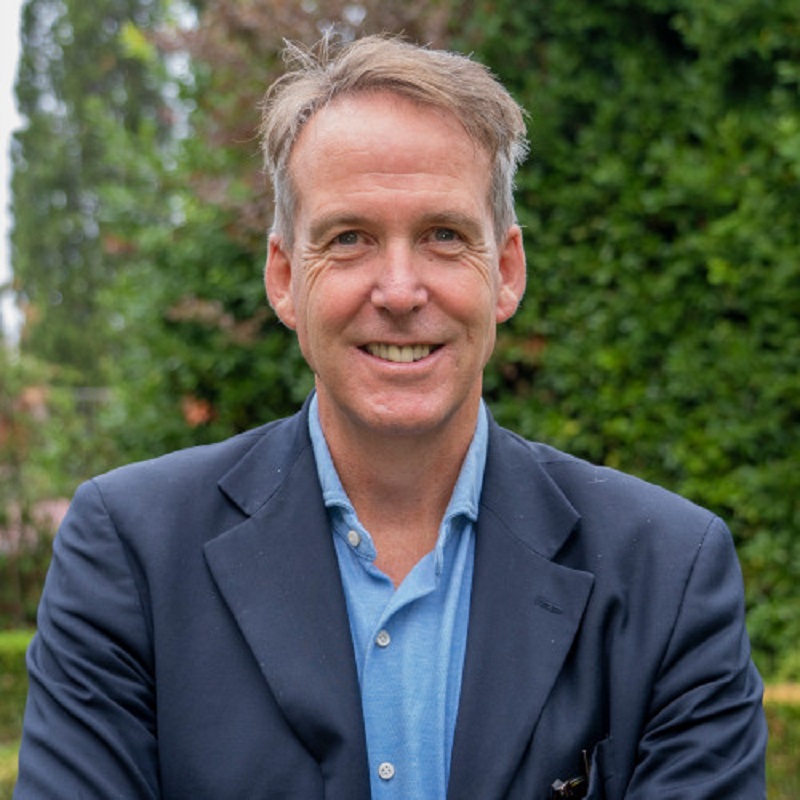
Andrew Geddes is a Professor of Migration Studies and Director of the Migration Policy Centre at the EUI’s Robert Schuman Centre. His work focuses on the politics and policy making of migration, spanning European migration governance, comparative regional migration systems, and the relationship between migration research, policy, and practice.
Notable recent publications include:
- What Europeans Think About Immigration and Why it Matters, with James Dennison, August 2026, Oxford University Press.
This EUIdeas essay is a contribution to the conversations of the EUIdeas research festival themed The Power of Knowledge, an occasion to celebrate the EUI’s 50th anniversary. The event aims to reimagine Europe by showing how universities can deploy knowledge to illuminate challenges, inform public debate, and contribute intellectually to the future of our societies.