International development at a crossroads
The international development sector is in crisis. In this EUIdeas post, Talha Jalal, Visiting Fellow at the EUI Florence School of Transnational Governance, breaks down the impact of recent foreign aid cuts and ongoing geopolitical realignment between the US and Europe. He highlights the need to reform the development sector in three fundamental ways: the level at which it operates, the way we measure what it does, and the way we talk about it.
Author:
Reading time: 10 min.
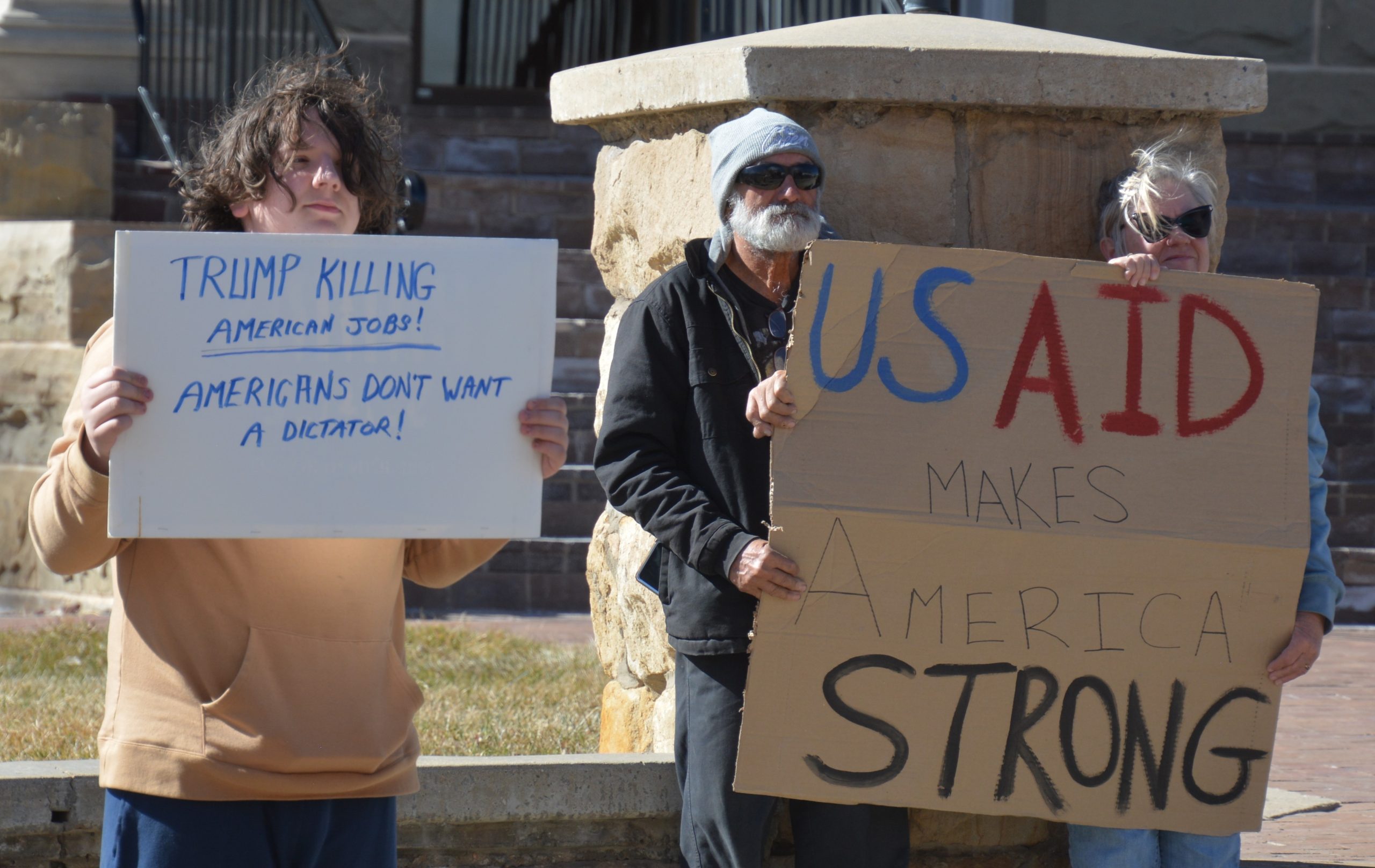
The international development sector, including humanitarian and global health programmes, is facing a renewed existential crisis due to what some have called the arrival of techno-fascism in America. Job losses in the thousands continue to mount, with the United States Agency for International Development (USAID) and its globally familiar motto, “From the American people”, being made into an example of wasted largesse for ungrateful and anti-American foreign interests. American foreign aid is effectively being gutted. In the last week of February, the US government ended funding for some 5,800 projects, or more than 90% of foreign aid programmes financed by USAID. The impact of this will be felt for years to come and may well be on par with the disruptions caused by the COVID-19 pandemic.
The American retreat from global development has also likely triggered an irreversible knock-on effect, resulting in strained aid spending from other donors in Europe. A shift in the US stance towards Ukraine – the largest ever recipient of international aid for any single country in a given year – is the first trigger. The second is a foundational shift in the American view of Europe. As European leaders confront their status as American vassals, salvaging European sovereignty is likely to trump helping the poor. The proposed €800 billion European defence package will likely represent a trade-off with malnutrition rates in Sudan and childhood immunization rates in Afghanistan, among other consequences. The UK has already signaled the way forward by cutting £6 billion from its foreign aid budget to ramp up defence. The result of all of this will undoubtedly be a reversal in global development progress, translating into an increase in morbidity, mortality, and many other such statistical indicators that provide a solemn veneer for the grief and misery of millions facing hunger, disease, and avoidable death.
USAID was a significant pillar of the liberal international order, not only because of its unmatched budget but also because of its normative role in the system at large. In 2023, traditional donor countries – members of the OECD Development Assistance Committee (DAC) – spent nearly $223 billion on overseas aid. $64.7 billion of this came from American taxpayers, primarily channelled through USAID. While multilateralism and non-profit internationalism, be it in the form of donor-funded NGOs or other similar ventures, have been the flag-bearers of the development agenda, half of all overseas development assistance has in fact been bilateral, at least since the beginning of record-keeping by the OECD. And bilateral aid is significantly driven by the national interests of the donor, whether that donor is the United States of America or another rich OECD country. It is no accident that the development sector has been flush with cash for Ukraine while struggling to keep programmes running in Afghanistan. Indeed, new donors, including emerging and middle powers like Turkey, Saudi Arabia, and the United Arab Emirates, have become influential contributors, spending to the tune of $17.4 billion in 2023 to advance their own national and regional interests through bilateral aid.
The foreign aid ‘industry’ is in large part a means for countries to project soft power, and this is reflected in how foreign aid is channelled, with hefty overheads absorbed by professionals from the very donor countries that send this aid. Of the nearly 400 multilateral and other international channellers of this aid in 2023, only nine were NGOs based in developing countries, and just 10 were local businesses. This context is important because the rationale for the gutting of USAID, as provided in terse termination emails to funding recipients and in the 28-page chapter on USAID in Project 2025 – described by the American Civil Liberties Union (ACLU) as ‘’a roadmap for how to replace the rule of law with right-wing ideals’’ – was that most foreign aid was essentially not in line with American national interests.
Unfit for purpose
For the international development sector, the present moment is not an aberration. Just before the elections that ushered Donald Trump back into power, UN member states convened in New York City for the ‘Summit of the Future’. These discussions revolved around proposals for upgrading the multilateral system, which is still structured for the challenges of the 1960s. That, of course, was just talk. The system is chronically unprepared – much like liberal politics – to shift away from a development model still structured for managing orderly decolonisation and untamed economic growth. A big chunk of foreign aid is in fact channelled through Bretton Woods institutions that, together with private creditors based in New York City, extract more in debt interest from lower-income countries than those countries spend on the wellbeing of their own citizens and the environment. One in three of the recipient nations, known as ‘International Development Association (IDA)-eligible’ under World Bank rules, is poorer than on the eve of the pandemic, with double the number of people facing hunger compared to 2019. Across the board, 85 percent of the Sustainable Development Goals (SDGs) – the key performance metric for the whole sector – are either off-track or regressing. This is as clear an indictment of the international development ‘industry’ as can be.
The ‘catastrophe’ at USAID surely cannot be the doing of Elon Musk’s interns, who were too young to drive a Tesla at the time the SDGs were collectively launched by UN member states. If Project 2025 is taken at least in part as the rationale for US government actions vis-à-vis USAID, it is, ironically, remarkably well aligned with conventional thinking within the development sector as far as reform goes. Advocates of reform, as well as the authors of Project 2025, argue that there needs to be a more prominent role for the private sector and greater localisation in the disbursement of foreign aid. But while it may be entirely sensible in making a libertarian critique of USAID, Project 2025 is remarkably thin on the importance of international norms that underpin how aid is delivered within countries. It is uninterested in how accessing populations in conflict zones depends on the impartiality, independence, and neutrality of aid workers; in global systems like procurement mechanisms for vaccinating millions of children across dozens of countries; in the necessity of scale and cooperative data sharing for healthcare interventions to actually work; and in most things that have to do with scientific consensus and social justice.
International cooperation and civility among nations, which often manifests as foreign aid, has long rested on a common understanding that there are exceptions to excludability and rivalry. An asylum seeker, for example, is an exception to the norm that foreigners are excluded from a privileged community of citizens. Similarly, the protection of children, healthcare facilities, and humanitarian workers is (or was) an exception to the otherwise all-out barbarity of war. These exceptions, among others, provide both an essential presence and a necessary guarantee for the maintenance of order. But the old incentive structure has now shifted, and those like Elon Musk and some state actors who are underwriting the dismantling of international development, prefer chaos to order. Exceptions are no longer needed. This leaves the sector out of options: unable to reform, out of money, and shorn of its etiological myth.
A new way of doing business
Technofeudalism may replace capitalism and naked mercantilism may supplant international development, but cross-border cooperation and interdependence is bound to continue. Future pandemics, climate change, growing anti-microbial resistance, food insecurity, and conflicts will be with us with or without the promised deliverance through Artificial General Intelligence (AGI)-driven efficiency. A new model of international cooperation is needed to tackle these shared challenges. This new approach must be different from the old model in three fundamental ways: the level at which it operates, the way we measure what it does, and the way we talk about it.
Even as international relations become unpredictable and dysfunctional, cities remain a pragmatic and future-oriented avenue where the vast infrastructure of multilateralism and cooperation can be redirected over the coming decades. Over half the global population now lives in urban settings, a proportion projected to grow to nearly 70% by 2050. Cities and their leaders are ultimately the closest network to the lived reality of people in need of aid. The Partnership for Healthy Cities and The Global Covenant of Mayors for Climate and Energy – the latter of which is an alliance of more than 13,000 cities and local governments from 144 countries – are just some of the many localised initiatives taking on our common challenges. These initiatives show that there is a thriving demand for global cooperation where it truly matters. This demand can be harnessed to usher in what I would call metro-lateralism– in other words, a new kind of development cooperation centred around cities.
But such localisation will remain wishful thinking as long as development is measured at only national levels. Cities need to be given the agency and the localised metrics to record human wellbeing so that we can evaluate our collective progress against such measures. Gross Domestic Product (GDP) is severely outdated as a measure of sustainable development and human progress. It fails to capture the full spectrum of public value generated, including how measurable outcomes and progress can be vastly different at the local level within countries. A more human-centred, localised, and environmentally sensitive metric of human progress can help us better assess how well public initiatives meet societal goals and contribute to the common good.
Last but not least is the matter of “narrative supremacy” that the critic Parul Sehgal has beautifully elucidated in her essay ‘The Tyranny of the Tale’. The United Nations alone had a programme budget of over $108 million for global communications in 2024. The sector spends over a billion dollars annually on ‘storytelling’ in one form or another, whether through public affairs, donor relations, or communications budgets. Storytelling is, as Sehgal writes, “offered as a means to advance every cause, from community empowerment to brand management,” and “has elbowed out everything else, from the lyric to the logical argument, even the straightforward news dispatch.” The international development sector has internalised this narrative method to such an extent that it is now a victim of its own grand narrative, wedded to liberalism, in the same vein as Francis Fukuyama’s ‘The End of History’. Fukuyama has famously moved on from his thesis, but the development sector remains stuck in the old paradigm. New ways of talking about development ought to be stripped of the neat narrative arc of liberal progress and must reflect the messiness of lived experience, unmediated by costly communication tricks and ‘engagement’ strategies.
In this new model, there will still be outliers. Global pandemics, for example, cannot be addressed without global surveillance, pathogen sharing, and national infrastructures. As with COVID-19, public-private partnerships may still dominate this domain. There will also be the truly independent parts of the aid sector, like Doctors Without Borders, who shun government financing for good reason and still operate on a budget exceeding the billion-dollar threshold. Their clout will grow as other organisations shrink in size. The likes of IOM – the UN’s migration agency – may transform into deportation contractors to keep their cashflows. The Gates Foundation, intimately tied to the supremacy of the tech sector, is also likely to remain a major global force. But international development will be forced to change. Insisting on old tales, no matter how powerful, is unlikely to save agencies from going under. What might save some is making an honest and overdue effort to localise and devolve at the expense of their own power.
Tags: international cooperation, Development, Development Policy