Egged: Use your voice against violence
An episode of harassment is the starting point for a reflection, by Policy Leader Fellow Tuhina Chatterjee, on why women, LGBTQ+ people, and racialised individuals are often targeted. Chatterjee stresses that the line between harassment and violence is subtle and proposes measures that would create a space where all individuals feel safe.
Author:
Reading time: 8 min.
I was really excited this weekend to check out a café near the Ponte Vecchio, Florence, which I had heard has one of the best views of the Arno River. It was a typical sunny Saturday in Florence. I was waiting for the number 7 bus near Fiesole like any other day, listening to the latest Financial Times podcast, when suddenly I realised something hit my right breast. I was covered in eggs as two teenage boys laughed at me and sped away on their scooter down the hill. All my theories of safety training – take a picture of the number plate, shout for help, look for a camera, etc. – vanished as I stood frozen and unthinking for a minute, while the yellow yolk of the eggs dripped down from my new green jacket towards my jeans. I just stood there!
In that moment I felt vulnerable, helpless, and unsure about why they had done what they did. Did they not like the fact I was there? Did they think I was a tourist? Or was it the fact that I was a racialised woman, standing alone at the bus stop, that made me easy target? My immediate reaction was to report this incident to the police, but I ran the scenario in my head: What would I say to them? I don’t even speak Italian. It would certainly be brushed off as overreaction on my part or as a silly prank by some teenage boys that meant nothing. I simply decided to walk back home and lock myself in my room.
Intersectionality and group harassment
It is not an isolated incident. Individuals with intersectionality and vulnerable groups, such as women, LGBTQ+ people, and racialised individuals, are often targeted in petty attacks or common assault. Such attacks might take the form of egging on the side of the road, an offensive comment while passing, a pinch on the bum, or a flashing in a dark corner. These are often not reported by victims, but have a significant impact on the them, physically and psychologically.
Born and raised in India, I was very aware of neighbourhoods to avoid after dark; I was given the advice to dress appropriately, to have a male accompany me late at night, or to ignore ‘minor’ incidents one may experience during daily commutes on crowded public transport. However, when I moved to Toronto, Canada, later in life, my perception was that women’s safety would not be an issue there. I was soon proved wrong, though, when I witnessed incidents of racial slurs hurled out while waiting for the subway or victim blaming by authorities on an incident of women being pushed on transit tracks.
A threshold of tolerance for ‘women’ as a collective group has not really been arrived at in practice. There is little literature on group harassment experiences, and incidents are often looked at from an individual lens. The ‘Unsafe on the Streets’ report 2018 by Plan International, which looked broadly at data across five cities (Delhi, Kampala, Sydney, Madrid, and Lima), identified that, ‘’Cities are not safe places for girls and young women: on the streets, on public transport, and in most public spaces they are frequently made to feel uncomfortable, unsafe, and intimidated, just because they are young and female.’’
In this digital age, harassment is not just limited to physical space; it also happens in the digital space, where in many parts of the world either the laws have not caught up to speed or there is still behavioural stigma attached. UN Women Data from 12 countries in Eastern and Central Europe report that more than 50% of women over the age of 18 have experienced some form of technology-related abuse in their lifetime, as have 23% of women surveyed across Europe (Denmark, Italy, New Zealand, Poland, Spain, Sweden), the UK, and the USA. According to Professor Elena Martellozzo, a researcher and associate director of the Centre for Abuse and Trauma Studies at Middlesex University, “Misogyny is growing and sadistic behaviour on behalf of boys and young men is growing online.”
The transition from harassment to violence: a slippery slope
Harassment, in its many forms, often serves as a precursor to more severe acts of violence. The transition from harassment to gender-based violence is a slippery slope, where seemingly minor incidents can escalate into more serious offenses. This escalation is rooted in the normalisation of harassment behaviours, which desensitise individuals and society to the gravity of these actions. When harassment is left unchecked, it creates an environment where perpetrators feel emboldened to commit more severe acts of violence.
According to the EU gender–based violence survey (wave 2021), 31% of women aged between 18–74 have experienced physical (including threats) or sexual violence in adulthood.
Source: EU Gender-based Violence Survey | European Institute for Gender Equality
Not speaking up
Individuals impacted by gender-based violence or harassment often do not speak up for multiple reasons, ranging from shame, not being taken seriously by people in authority, facing language barriers in the host country, amongst many others.
According to the EU gender-based violence survey, only 1 in 5 women victims of violence have contacted a healthcare or social service provider, and just 1 in 8 have reported the incident to the police. Victims often feel alone and feel that the burden of effort would fall upon them and, for someone who may have undergone an incident or multiple incidents, that burden can feel quite heavy. This makes gender based violence one of the most common yet hidden form of violations in the world.
What can we do better?
Systemic change: There is a need for better sensitisation of police for supporting victims of violence and harassment. A change in perception is required so that victims feel safe to report incidents, instead of feeling that their experiences would either get misconstrued or trivialised. Information on available support (reporting an incident or counselling) should be provided on transport hubs, such as bus stops, train stations, or airports. Tourists’ locations such as Florence could also clearly provide phone numbers of emergency services, like police, at key areas. Thanks to the widespread adoption of technology, all the essential resources could be compiled in multiple languages linked to a QR code which individuals could scan to access. A more gender responsive transit system in design and operation could be created, taking women’s safety issues into serious consideration.
Individual support: If you are the friend or family to whom the individual experiencing gender-based violence or harassment has opened up to, then seek resources available that can help support the individual, be it culturally sensitive counselling or formal reporting. A study titled ‘Tip of the Iceberg: Reporting and Gender-Based Violence (GBV) in Developing Countries’ found that ‘Forty percent of women experiencing GBV previously disclosed to someone; however, only 7% reported to a formal source (with a regional variation of 2% in India and East Asia to 14% in Latin America and the Caribbean).’
Behavioural change: Boys and men need to be meaningfully engaged and encouraged through behaviour right from home and within community. It will take more than a few days or trainings to change behaviour; rather, it will require persistent and consistent messaging that everyone has the right to feel safe, that it is not ‘cool’ to harass, and that abuse is a crime. Educational institutions should further re-enforce messaging and try to break the ‘masculinity’ dominance norms not just through lectures, but also through the actions displayed by individuals working in those institutions.
Technology usage: Technology innovations should be leveraged and integrated into current programmes for prevention of gender-based violence and harassment. AI could be used to monitor online abuse or content that may be derogatory. Many mobile apps have now been developed for providing services, such as safe location sharing and chatbot adoption, and lessons learned from different countries could be widely shared through communities of practices. Additionally, technology adoption needs to be backed with further communication or dissemination plans for the target audience.
Lastly, how we process these incidents rests on us as individuals, and there is no right or wrong way to do it. I cannot blame the victims for not speaking out when I, as someone who is educated, economically stable, and living in democratic country, could not bring myself to speak up about past incidents, or the present public attack on my vulnerability by two unknown boys who threw eggs at me in broad daylight. But, as I did want to raise my voice against violence, I choose this blog as a mechanism to speak up and share.
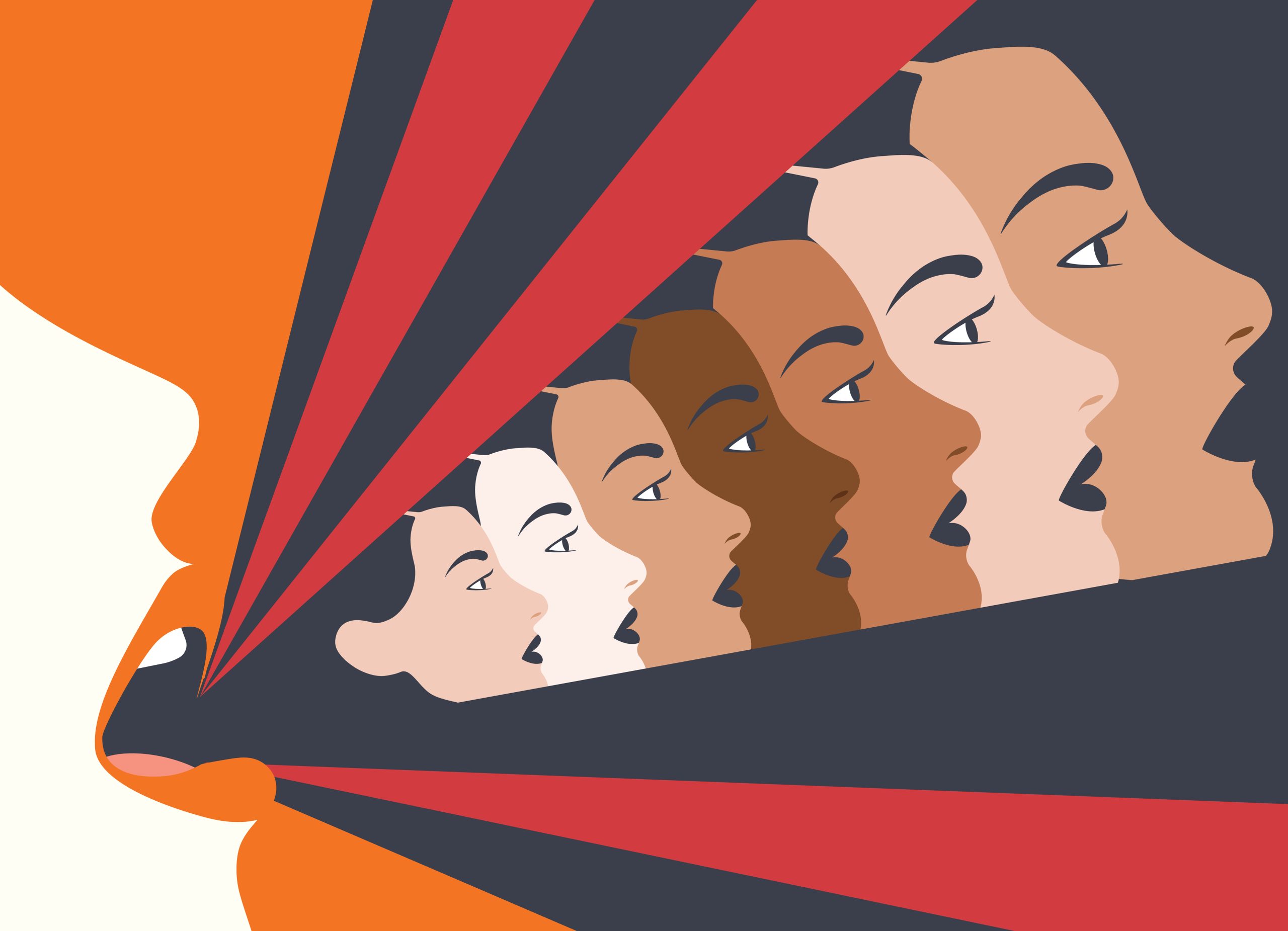
I want any girl or woman who has experienced gendered violence or harassment in any space, form or magnitude to know that ‘you’ matter, your voice matters, and you have the right to choose how you express yourself. Don’t let the experience define who you are or fill you with self doubt, making you ask yourself, “why me”? Instead, let’s focus on collective healing and processing, to be there for each other and to push for systemic, behavioural, legal, and societal change.
We all deserve equal safe spaces: let’s #voiceagainstviolence!
Tags: harassement, Violence