Stay home, stay silent: When power tells you not to vote – and democracy pays the price
On the 8-9 June 2025, Italian citizens are called to vote on five important abrogative referenda. The President of the Italian Senate has been encouraging voters not to go to the pools. Master Student Elena Casali delves into the risks for a democracy when political figures campaign for citizens’ silence and highlights the importance of voting to reaffirm democratic life.
Author:

Reading time: 5 min.
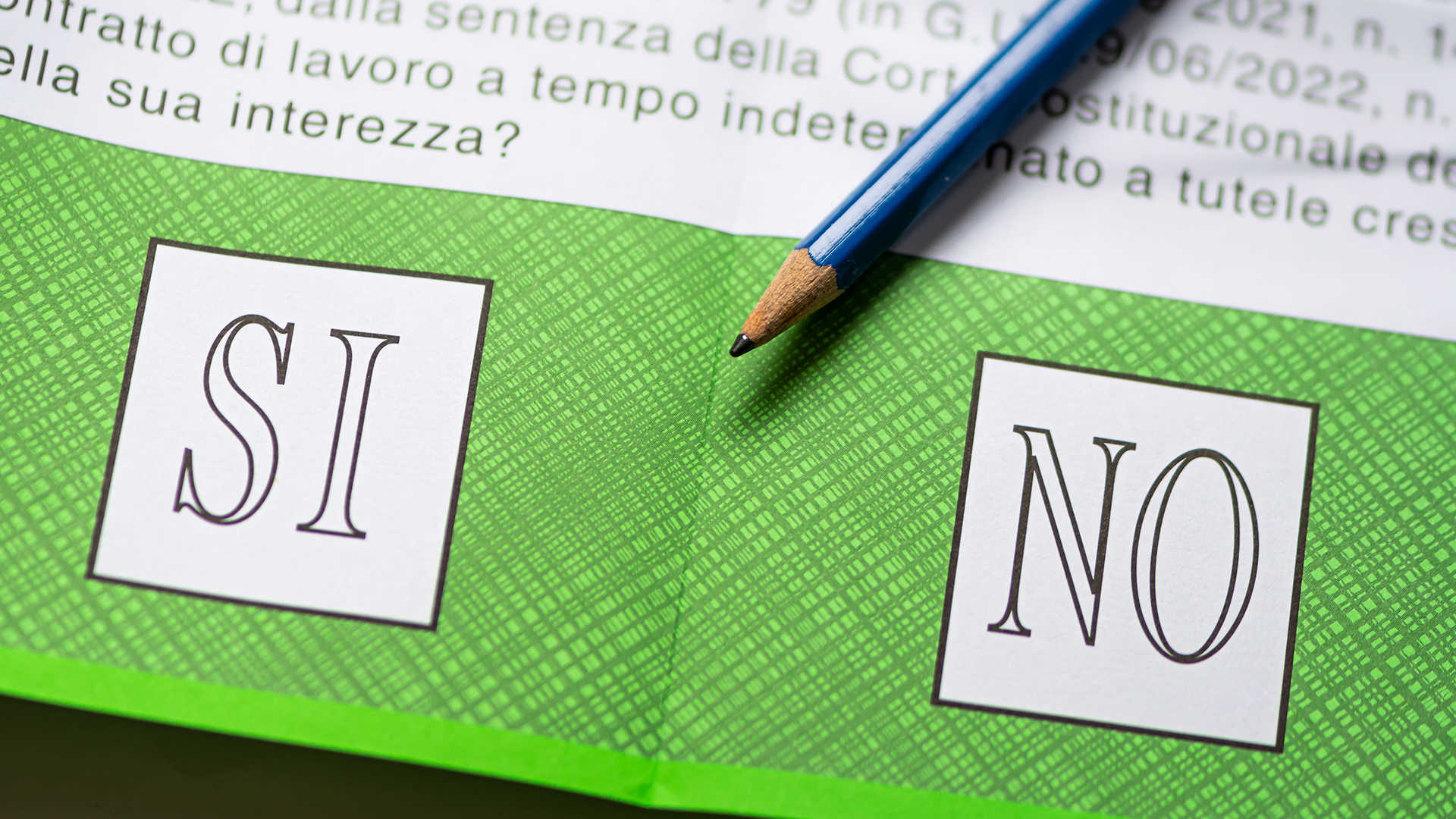
This weekend, Italian voters are being called to decide on five crucial referenda that strike at the heart of the country’s economic and social fabric. Four of the questions concern labour rights—ranging from protections against unlawful dismissal to measures aimed at reducing job insecurity and strengthening workplace protections. The fifth proposes simplifying access to citizenship for second-generation immigrants by reducing the required period of legal residence for non-EU adults from ten to five years. These are not marginal technicalities—they are questions about the kind of society Italians want to live in. This vote is an opportunity to reaffirm the sovereignty of the people, to show that democratic participation is not a formality, but the foundation of collective self-determination.
Yet the attention surrounding the vote has not been on the merits of these legal questions, but rather on a surprising, but not new, political strategy: calls for abstention, echoing Bettino Craxi call for abstention during the 1991 referendum on the electoral system. Most notably, Senate President Ignazio La Russa, during a Fratelli d’Italia event, publicly encouraged voters not to participate, stating his intention to “make propaganda for people to stay at home.” This move has triggered widespread debate and polarised reactions. But beyond the controversy, it raises crucial questions: What does it mean for a democracy when high-level political figures campaign not for ideas, but for silence? How does this influence the rethinking of representative democracy in the country in the long term?
Not voting is not the same as voting “No”
Calls for abstention are not ideologically neutral. They are strategic. Italy’s referendum mechanism includes a quorum: for a referendum to be valid, more than 50% of eligible voters must participate. Therefore, encouraging people to stay home effectively sabotages the vote, not by contesting the proposals themselves, but by rendering them institutionally invisible.
This tactic is deeply problematic in a country whose Constitution begins by declaring that the Republic is “founded on labour”. When citizens are invited to vote on rights central to that founding principle, the governing coalition’s call for disengagement cannot be brushed aside as a tactical choice. It strikes at the core of democratic accountability.
Moreover, Article 48 of the Constitution clearly defines voting as “a civic duty.” Undermining that duty from within the highest offices of the state sends a dangerous message: that political institutions no longer see citizens as necessary participants, but as manageable variables.
Unlike voting ‘No,’ abstention makes it harder to understand voters’ intentions. It is nearly impossible to distinguish between those who abstain due to disillusionment and those who follow the abstentionist campaign. A blank vote or a marked ballot, whether in favour or opposition, communicates intention and keeps the democratic conversation alive. Encouraging mass abstention, however, erodes the habit of participation and weakens the connection between citizens and their institutions, with the risk of irremediably transforming democracy from a participatory process into a spectator sport.
Italy’s legal framework also makes clear that such calls are not without consequence. Article 98 of the Consolidated Text of Electoral Laws (1948) penalises public officials who incite abstention, with potential criminal liability. Though the goal is not to increase the enforcement of this law, but rather to recognise the seriousness of undermining civic engagement from within the institutions themselves.
Historical data backs this concern. Many referenda in Italy have failed not because voters opposed them, but because turnout did not reach the required threshold. In other words, silence has often been more politically decisive than speech.
When political silence signals something deeper
Indifference, more than disagreement, is the true enemy of democracy. If citizens lose faith in the power of their vote, the entire structure of representative democracy begins to erode. And yet, instead of fostering participation, democratic institutions are actively discouraging it.
There is something paradoxical here. In academic and political circles, much energy is being devoted to innovating democracy – experimenting with citizens’ assemblies, participatory budgeting, or digital platforms to increase engagement. These are promising ideas. But they all rest on one assumption: that people want to be involved.
How can these projects evolve if the youth is growing in such a political environment? How can we expect new democratic tools to succeed when the most basic ritual of democracy—the act of voting—is treated with such indifference or even hostility by those in power? When those elected to represent the public openly discourage civic participation, they aren’t just resisting reform—they are actively undermining the foundation upon which all reform must rest.
Beyond the referenda: what’s really at stake
This weekend’s referenda may or may not pass. What is at stake is something more fundamental: the vitality of Italian democracy. If turnout falls to historic lows, the failure will not lie with the citizens who chose the beach over the ballot. It will lie with those in power who treated democratic participation as expendable.
Italy faces not only a test of civic belief, but also the risk of driving its youth even further away from the world of politics. If the ruling political class views democracy as something to bypass when inconvenient, rather than strengthen when challenged, then the problem runs far deeper than any single vote.
That crisis would stem from disconnection and disengagement. Young people are absorbing this narrative and may genuinely come to believe that it’s not their role to confront reality or take part in collective decisions on national issues. And once that mindset takes hold, it becomes incredibly difficult to reverse.
For Italy to confront this risk, political leaders must not treat electoral participation as a partisan tool. They must recognise that the act of voting—whether Yes, No, or blank—is not only a method of choosing policies but a reaffirmation of democratic life. When political institutions turn their backs on that principle, they don’t just weaken a vote—they weaken democracy itself.
Tags: Democracy, Referendum, Voting