Delaying the EU Deforestation Regulation: a golden opportunity for cooperation
The European Union’s decision to delay its landmark anti-deforestation regulation, the EUDR, by one year offers a valuable opportunity to rethink how global supply chains can support both forest protection and fair trade. While the regulation aims to keep deforestation-linked products out of the EU market, its current rigid requirements risk undermining existing local conservation efforts and raising costs for consumers. Policy Leader Fellow Bruno Capuzzi proposes measures to make the EUDR more effective, more compatible with international trade rules, and more supportive of sustainable development worldwide.
Author:

Reading time: 8 min.
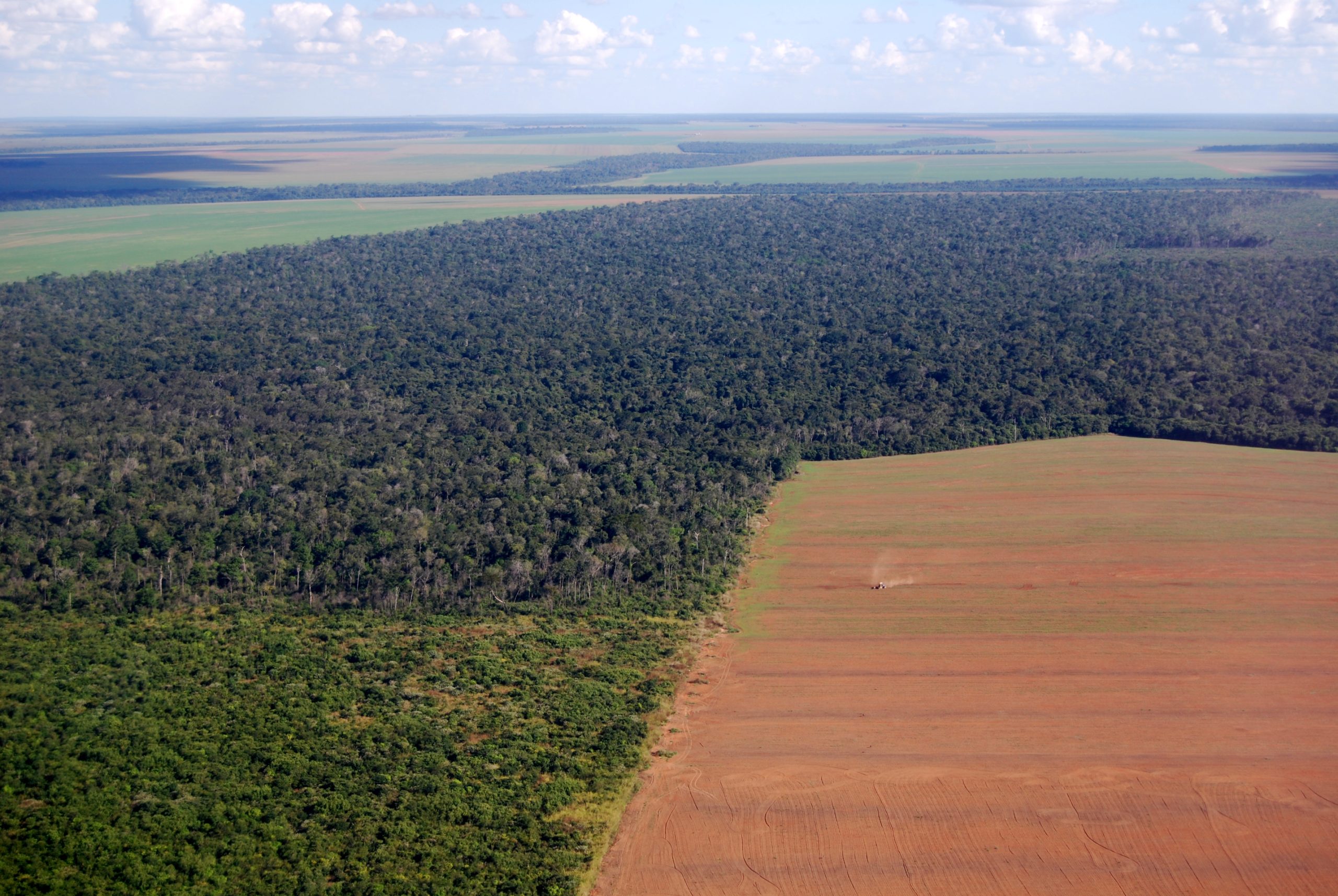
The European Union is set to implement its first anti-deforestation measure on imports starting from 30 December 2025. The Regulation on Deforestation-free Products (EUDR) aims to ensure that the products EU citizens consume do not contribute to deforestation or forest degradation worldwide. The postponement of the entry into force of the EUDR for one year, which was undertaken due to lack of preparedness from the European Commission, represents a crucial opportunity for the European Commission to realign the regulation with international trade law and foster meaningful cooperation with third countries.
As currently designed, the EUDR risks imposing unnecessarily rigid and uniform requirements on all trading partners, potentially restricting trade more than is needed to achieve the EU’s environmental goals and undermining existing local efforts to curb deforestation. By using this additional year to negotiate outcome-based equivalences with countries that already have effective anti-deforestation measures in place, the EU can ensure the EUDR is both compliant with the World Trade Organisation (WTO) and supportive of global forest conservation, without disrupting supply chains or duplicating efforts.
The regulation’s compliance with international rules is questionable as it poses horizontal (one-size fits all) and rigid requirements to all countries, and it is set to restrict more trade than would be necessary to meet its objectives. Reports from the WTO, that work similarly to an international trade jurisprudence, offer sound elements on how to apply measures that restrict trade to protect environmental resources: Such measures should be adaptable and able to account for different realities in affected countries, and they should prioritise outcome-based approaches over production-related conditions. For a more detailed WTO compatibility assessment, see the policy brief co-published with the European Centre for International Political Economy (ECIPE). The additional year until full implementation of the EUDR offers the European Commission a much-needed opportunity to correct course towards WTO compliancy through a cooperative approach with third countries. A viable way to do that would be to accept local practices that already curb deforestation in supply chains as EUDR equivalences, rather than requesting a new system of requirements to establish compliance.
The rigidity and lack of clarity of some of the requirements risk cut supply for European industry and consumers. The European Commission tried to address some of the concerns brought by EU industry with the Draft Delegated Act from 15 April 2025. In addition to simplifying some EUDR requirements, the Delegated Act made possible the commercialisation of bulk-traded commodities that could otherwise be in short supply, such as coffee, leather, animal feed, and other soya-based products for human consumption in the EU. It also eliminated the necessity of duplicating documents by EU operators by allowing companies to submit deforestation statements annually (rather than per shipment) and to list existing statements from suppliers instead of issuing new ones.
Regardless of these necessary simplifications, the EUDR still applies EU criteria for anti-deforestation supply chains to third countries. These criteria include the deforestation cut-off date for defining legal or illegal products, a country-risk benchmark system, individualisation of products, and the mandatory use of EU’s Copernicus and Information Systems. Consumers and producers could benefit significantly from enhanced cooperation with third countries to ensure that the EUDR complements existing tools for forest conservation in these countries, rather than overriding or undermining local efforts that are already underway. By recognising and building upon existing successful local practices and certification schemes in third countries, the EU can support global anti-deforestation efforts without reinventing the wheel where it already works.
How do equivalences work?
The international trade regime allows countries to impose certain product requirements as conditions for import authorisation. These requirements, known as non-tariff measures (NTMs), often aim to protect human, animal, or plant health by controlling harmful substances or other risks. To ensure fairness and avoid discrimination, the conditions imposed on imported goods must be equivalent to those applied to domestic products. This principle is implemented through the acceptance of equivalences.
For example, suppose Country A mandates a specific certification scheme for consumer safety issued by its national accreditation body, which is compulsory for local producers. Imported goods from Country B will not be subject to Country A’s national accreditation service. Instead, Country B can negotiate for its own certification schemes, issued by its national accreditation body, to be recognised as equivalent, provided they achieve the same level of consumer safety required by Country A. By accepting different certification processes that deliver the same safety outcomes, Country A establishes a system of equivalences, recognising that Country B’s different procedures are equally effective.
In this example, equivalence is justified because Country A’s accreditation service does not operate in Country B. In other cases, equivalence may be based on differing local contexts such as climatic conditions, economic affordability, or the availability of resources. Since countries vary widely, these importing conditions typically focus on product characteristics and composition rather than on production and process methods (PPMs). However, the use of PPM-based measures remains a contentious issue in international trade law. A comprehensive debate on the issue can be found in a dedicated report from the Institute for International Sustainable Development (IISD) and in a 2020 analysis by Sifonios and Ziegler.
Trade-restrictive measures aimed at environmental conservation must follow the same principles as other non-economic objectives, as outlined in the WTO guidance on NTMs. WTO dispute rulings have clarified that trade restrictions to protect environmental resources are permissible, as seen in landmark cases such as the ‘Tuna-Dolphin’ and ‘Shrimp-Turtle’ disputes. However, such measures must be outcome-based rather than discriminating against different production practices. Negotiating equivalences with third countries would simultaneously strengthen the EUDR’s WTO compatibility and eliminate unnecessary red tape for EU operators.
Why it should be applied to deforestation?
The EUDR is not the first initiative aimed at curbing deforestation. Several country and sector-specific programmes already exist with established cut-off dates, after which commercialised goods cannot be linked to deforested land. Among the most successful private initiatives is Brazil’s Amazon Soy Moratorium (ASM), which has effectively decoupled soya production from deforestation. Since its inception in 2006, the ASM has virtually eliminated deforestation linked to soya cultivation in the Amazon. Indeed, 98% of soya traded in Brazil was deforestation-free by the 2018-2019 crop season, even before the launch of the EU Green Deal in December 2019.
The ASM uses a cut-off date of July 2008, meaning that soya grown on land deforested after this date is excluded from supply chains. In contrast, the EUDR sets a later cut-off date of December 2020 and requires a specific certification process that is only applicable to the European market. This disregards the existing ASM certification and verification system, risking the weakening of local efforts. Indeed, some Brazilian stakeholders have advocate for rolling back the ASM’s 2008 cut-off date to align with the EUDR’s later standard, which would undermine progress made since 2008.
Similarly, Brazil’s timber industry has established forest management and certification systems that protect native forests and regulate timber supply chains. The cut-off date for protecting native trees in timber supply chains in Brazil is 2004. Brazil’s timber and paper industry operates with strict sectoral rules, under which only wood from planted trees enters the supply chain, with native forests protected since 2004. Other sector-specific initiatives outside the EU’s borders, such as the Fairtrade Standard for Coffee and Fairtrade Standard for Cocoa, also exist and could be further supported through negotiating equivalences with the EUDR framework.
These established programmes demonstrate that it is possible to expand production while protecting forests. In the case of the ASM, Brazil has experienced a 344% increase in soya cultivation in the Amazon biome between 2009 and 2022 without increasing deforestation. The success of these initiatives highlights the importance of building on existing local solutions rather than imposing new, EU-specific requirements that may disrupt effective conservation efforts in third countries.
Why not push for cooperation?
The EUDR current rules are likely to increase transactional costs and risk reducing the availability of goods for European producers and consumers. Given current geopolitical and trade tensions, these potential outcomes are especially concerning. By adopting a more flexible, outcome-based approach that negotiates equivalences with third countries, the EU could create a genuine win-win scenario: strengthening the EUDR’s environmental effectiveness, ensuring better alignment with WTO rules by respecting diverse national contexts and existing local solutions, and making compliance easier across supply chains.
There are clear benefits to increasing cooperation, and there is no compelling reason for civil society groups or the private sector not to demand that the European Commission engage in meaningful collaboration with third countries. Such a strategy would help the EU to avoid accusations of unjustifiable extraterritoriality or overly restrictive trade measures, as claimed in previous WTO disputes over environmental regulations, such as the US Tuna-Dolphin and Shrimp-Turtle cases.
By recognising what already works on the ground, the EU can turn a regulatory delay into a springboard for global cooperation and better environmental outcomes.
Tags: EU, deforestation, EU Regulations