The enduring relevance of the Schuman Declaration
On the occasion of the Europe Day celebrations, Erik Jones, the Director of the EUI’s Robert Schuman Centre for Advanced Studies, reflects on the ambitions of the Schuman Declaration, on the achievements of the European Union which has its basis on that declaration, and on the challenges faced by Europe today.
Author:

Reading time: 5 min.
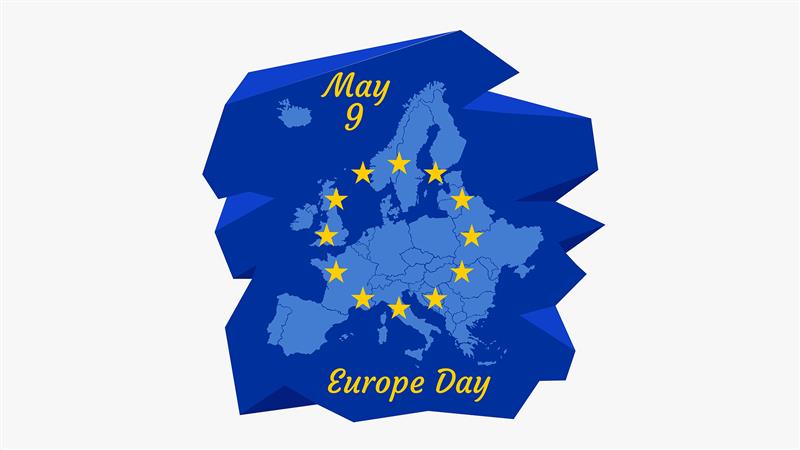
Europe Day marks the anniversary of Robert Schuman’s Declaration of 9 May 1950 proposing the creation of what would come to be known as the European Coal and Steel Community, the precursor of today’s European Union. That day is worth celebrating both for its contribution to peace in Europe and for launching the European project. It was a bold solution to the international control of the Ruhr after the end of the Second World War. It was a vital step in the postwar reconciliation of France and Germany and the restoration of German sovereignty. Most important, it was a sea-change in the way national governments work together to address problems of common interest. We celebrate ‘Europe Day’ because we see its success in the European Union, but the declaration is also a statement about what is possible beyond these European achievements.
Imagination, implementation, impact
That sense of possibility gives the Schuman Declaration – and the method for integration introduced by Jean Monnet in partnership with Robert Schuman – its enduring relevance. The declaration starts with the aspiration to engage in ‘creative efforts proportionate to the dangers that threaten’ European security and it calls on policymakers to match those creative efforts with ‘concrete achievements which first create a de facto solidarity’. The sequencing is important – imagination, implementation, impact. The goal was not to come up with ‘a single plan’, but to lay ‘common foundations for economic development’ that would involve ‘the modernization of industry’ and the ‘equalization and improvement of living conditions’, and that would be ‘open to all countries willing to take part.’ Ideally, these actions would extend beyond Europe to help Europeans achieve other ‘essential tasks, namely, the development of the African continent.’
The achievement of such ambitions relied on a ‘fusion of interest’ as well as ‘markets.’ Participating countries would gain access to materials ‘on identical terms’, ‘freed from all customs duty.’ But this emphasis on markets and liberalisation was only part and not parcel. It was obvious that countries would start from ‘very different conditions.’ Therefore, the project relied on ‘the application of a production and investment plan, the establishment of compensating machinery for equating prices, and the creation of a restructuring fund’ as ‘transitional measures.’ These non-market instruments are the most well-articulated parts of the declaration.
The instruments to ensure that differences in circumstances across countries did not result in the perverse power dynamics are also well established. Although the Schuman Declaration focused on France and Germany, that was because of the two countries’ ‘age-old opposition’ and the corresponding need to bind ‘bind France, Germany, and other member countries … to the preservation of peace.’ Hence, the negotiation of any agreement ‘will be undertaken with the help of an arbitrator appointed by common agreement’ who can ensure that ‘agreements reached conform with the principles laid down’ and who can resolve any ‘deadlock’ by deciding on an appropriate ‘solution’.
The last paragraphs of the declaration sketch the governance arrangements that ultimately resulted in the European institutions we have today. The early text already made it clear that this is to be ‘the first step in the federation of Europe’. These governance paragraphs suggest only that the new organization would involve the appointment of ‘independent persons’ who could give ‘equal representation’ to participating governments. They also suggest that this arrangement would connect to the wider United Nations, both through the accreditation of a UN representative and through a ‘twice yearly’ ‘report to the United Nations’ ‘concerning the safeguarding of its objectives’. The institutional elements come almost as an afterthought, neither introduced nor concluded with lofty rhetoric but as a detail associated with implementation.
What is striking is not how much of this came to pass. The European Union that eventually emerged from this inspiration is not a federation, but it is vastly more complicated that the final paragraphs of the declaration suggest. How much of that development derived from intergovernmental bargaining and how much from supranational entrepreneurship, how much it reflected underlying popular support or the potential for popular resistance, have been and remain subjects of intense academic debate. But this is not what we celebrate. Instead, we celebrate the achievement of de facto solidarity, the fusion of interests, and the creation of a shared sense of common destiny that is open to all countries willing to participate and that is capable of rising to great challenges both in terms of the preservation of peace in Europe and in terms of the promotion of economic development, equality of opportunity, improvements in living conditions, and the enhancement of productivity.
The challenges ahead
Such celebration should not take attention away from the challenges still to be faced. The threats to European security are great. Productivity growth has been lagging. European market integration needs maintenance. European governance arrangements need streamlining. Candidate countries want to join Europe, but the European Union is not ready to receive them. Meanwhile, the solidarity created by European institutions is under strain. Public opinion is divided. And the whole structure of world order is changing in ways that are less supportive of European ambitions.
The Schuman Declaration – and the experience of the past seventy-five years – makes it clear that Europeans possess the creativity necessary to rise to these challenges. The harnessing of that European imagination has already begun in the elaboration of major reports on promoting the internal market, bolstering competitiveness, strengthening resilience, and enhancing security. Political leaders both inside and outside Europe have recognised that the European Union must enlarge to embrace like-minded peoples who aspire to share and contribute to a common destiny. The implementation will be complicated. Then as now, there is no single plan. But the determination to bring together countries in very different circumstances together in a common project is manifest, as is the potential for that project to have a revolutionary impact.
Tags: EU, Europe, European History